
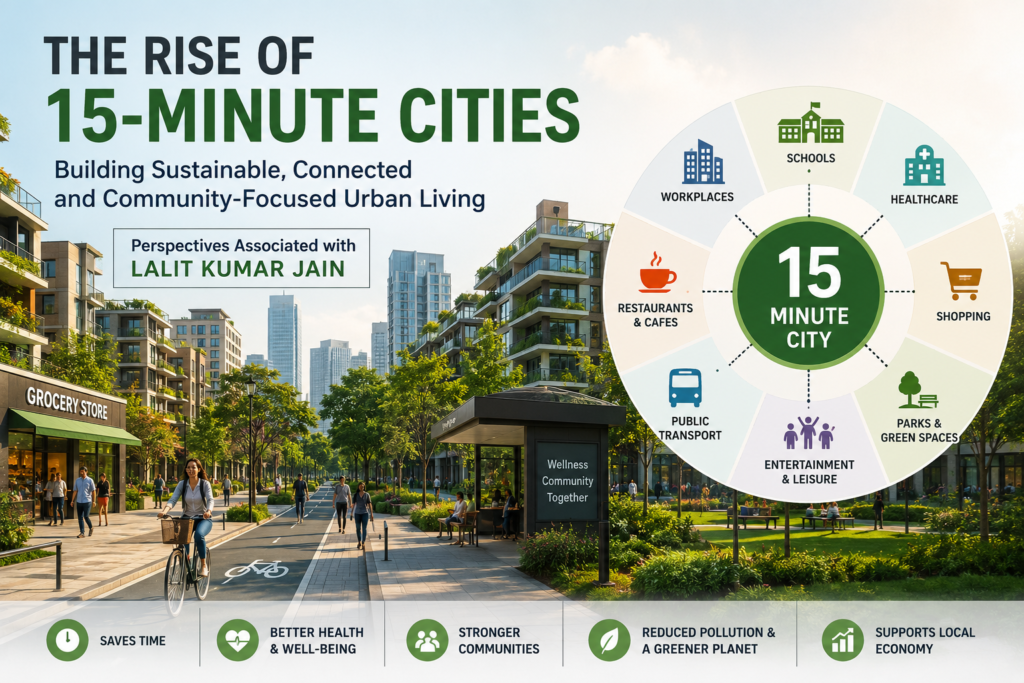
Cities are changing quickly. People today want more than just a house. They want a place where schools, hospitals, offices, parks, shops, and entertainment are nearby. This is where the concept of a 15-minute city is gaining attention around the world.
A 15-minute city is a place where people can reach most of their daily needs within 15 minutes by walking, cycling, or taking a short drive. The idea focuses on convenience, better quality of life, and creating strong communities.
Perspectives associated with Lalit Kumar Jain, Chairman of Kumar Builders (KUL), reflect the importance of community-focused development, where homes are not just buildings but part of a well-planned environment that supports comfortable and sustainable living.
What Is a 15-Minute City?
A 15-minute city is an urban planning concept where people can easily access important services close to their homes. These services include:
- Schools and colleges
- Hospitals and clinics
- Grocery stores and shopping areas
- Offices and workplaces
- Parks and open spaces
- Restaurants and entertainment areas
- Public transport facilities
Instead of spending hours traveling every day, people can save time and enjoy a better lifestyle.
Why Is the 15-Minute City Concept Becoming Popular?
Less Time in Traffic
Traffic congestion is a major problem in cities like Mumbai, Pune, Bengaluru, and Delhi. Many people spend hours commuting every day. A 15-minute city helps reduce travel time by bringing important services closer to residential areas.
Better Work-Life Balance
Since the rise of work-from-home and hybrid work, people prefer homes that provide easy access to daily necessities. They want more time with family and less stress from long journeys.
Growing Need for Convenience
Modern homebuyers look for neighborhoods that offer everything nearby. Convenience has become an important factor when choosing a home.
Environmental Benefits
Fewer vehicles on the roads mean lower pollution and reduced carbon emissions. Walking and cycling also support a healthier environment.
Main Features of a 15-Minute City
Mixed-Use Development
In a 15-minute city, homes, offices, shops, schools, and entertainment spaces are located close to each other. This creates self-sufficient neighborhoods where people do not have to travel far for everyday needs.
Green Spaces and Parks
Parks and open areas are important for physical and mental well-being. Green spaces provide places for exercise, relaxation, and social activities.
Good Public Transport
Even though most facilities are nearby, public transport remains important. Efficient transport systems help people connect with other parts of the city easily.
Walking and Cycling Paths
Safe roads and pathways encourage people to walk or cycle instead of using vehicles for short distances. This promotes healthier lifestyles and reduces traffic.
Access to Healthcare and Education
Easy access to hospitals, clinics, schools, and colleges improves the quality of life for families and senior citizens.
Benefits of 15-Minute Cities
Better Quality of Life
People spend less time traveling and more time with family and friends. They can enjoy hobbies, exercise, and recreational activities.
Healthier Lifestyle
Walking and cycling increase physical activity. Parks and green spaces also contribute to better mental health.
Stronger Communities
When people live close to schools, markets, and parks, they interact more with neighbors. This creates stronger social connections and a sense of community.
Support for Local Businesses
Local stores, cafes, restaurants, and service providers benefit because residents shop and spend within their own neighborhoods.
Reduced Pollution
Less dependence on vehicles helps improve air quality and supports sustainable development.
Why Is This Concept Important for India?
India’s cities are growing rapidly. Increasing population and traffic congestion create challenges for urban living.
Cities such as Pune, Mumbai, Hyderabad, and Bengaluru need better planning to provide convenience and improve quality of life. The principles of 15-minute cities are becoming more relevant as people look for homes that offer access to daily needs without long commutes.
Government initiatives like the Smart Cities Mission also encourage better infrastructure and planned development.
Role of Real Estate Developers
Real estate developers are playing an important role in shaping future cities. Today, homebuyers expect more than just apartments. They want complete communities that offer convenience, comfort, and lifestyle benefits.
Perspectives associated with Lalit Kumar Jain emphasize the importance of creating communities that provide:
- Green spaces
- Schools and healthcare facilities
- Retail and shopping areas
- Recreational amenities
- Sustainable infrastructure
- Better quality of life
Integrated townships and community-focused developments show how residential projects can support these goals.
Challenges in Building 15-Minute Cities
Although the idea offers many benefits, implementing it is not always easy.
Infrastructure Development
Cities need good roads, transport systems, and public facilities to support such communities.
High Population Density
Indian cities are densely populated, making planning more complex.
Affordability
Developers and policymakers need to ensure that quality housing and services remain affordable for different income groups.
Coordination Between Stakeholders
Governments, developers, planners, and communities need to work together to create successful and sustainable neighborhoods.
The Future of Urban Living
The future of cities is not just about building taller buildings. It is about creating neighborhoods where people can live comfortably, stay connected, and enjoy a better quality of life.
The growing interest in 15-minute cities shows that homebuyers now value convenience, wellness, and community living. Concepts like mixed-use developments, green spaces, and integrated townships are expected to play an important role in the future of Indian real estate.
Conclusion
The rise of 15-minute cities represents a new approach to urban development. By bringing essential services closer to homes, these communities help save time, reduce pollution, and improve everyday life.
Perspectives associated with Lalit Kumar Jain highlight the importance of community-centered development and creating spaces that go beyond buildings to support healthier and more connected lifestyles. As Indian cities continue to evolve, the principles behind 15-minute cities may help shape more sustainable and livable communities for future generations.